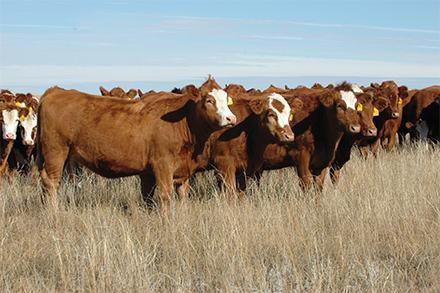
If you decide that it’s best for your operation to raise and develop replacement heifers from your herd, it’s important to choose animals that are profitable and fit your production system. Here are some things to consider to help you in your selection decisions.
Post Weaning:- Structural soundness, health, disposition
- Sound feet, legs, eyes are important for longevity in the herd. Rule out any heifers with severe unsoundness, are in poor health, or have undesirable disposition. Ideally heifers may have wideness and depth of body.
- When they were born in the breeding season
- Calves born early in the breeding season are older and typically heavier at weaning, meaning they should have a better chance of conceiving and calving earlier in the breeding season resulting in improved reproductive efficiency.
- Genetic merit
- Desirable/undesirable traits of the parents should be considered: hair shedding, feet and legs, udder quality. Many traits are at least somewhat heritable.
Pre-Breeding (4-6 weeks prior): Screen again for soundness, health, disposition
- Target weight
- Typically heifers should weigh 65% of mature body weight at the time of breeding. This is normally seen as a minimum weight, ensuring that heifers are developed enough for breeding and the increased nutrient requirements of calving/lactation.
- Repro tract scoring, pelvic measurements
- This additional information can be obtained by working with a veterinarian rather than solely relying on weight to determine reproductive maturity.
Post-Breeding
- Pregnancy status and date of conception
- This may be one of the most important criteria for selecting profitable animals. Heifers that calve early in their first season are shown to have greater lifetime productivity. By pregnancy checking with an ultrasound after 90 days post breeding, the date of conception can be known.
- Decisions on the open heifers can be made at this time too.