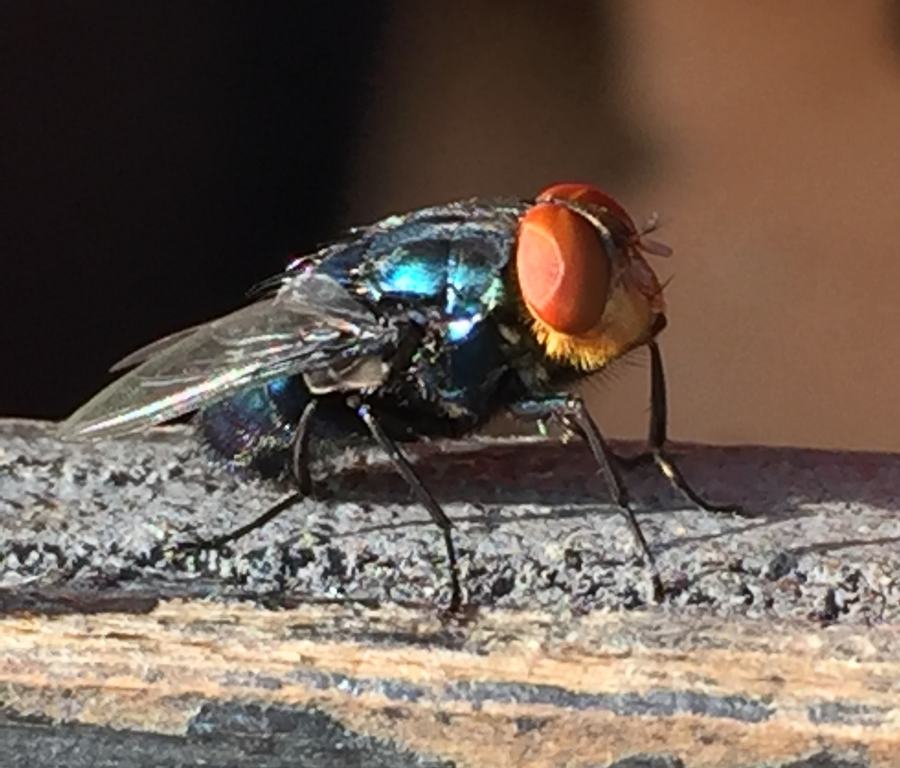
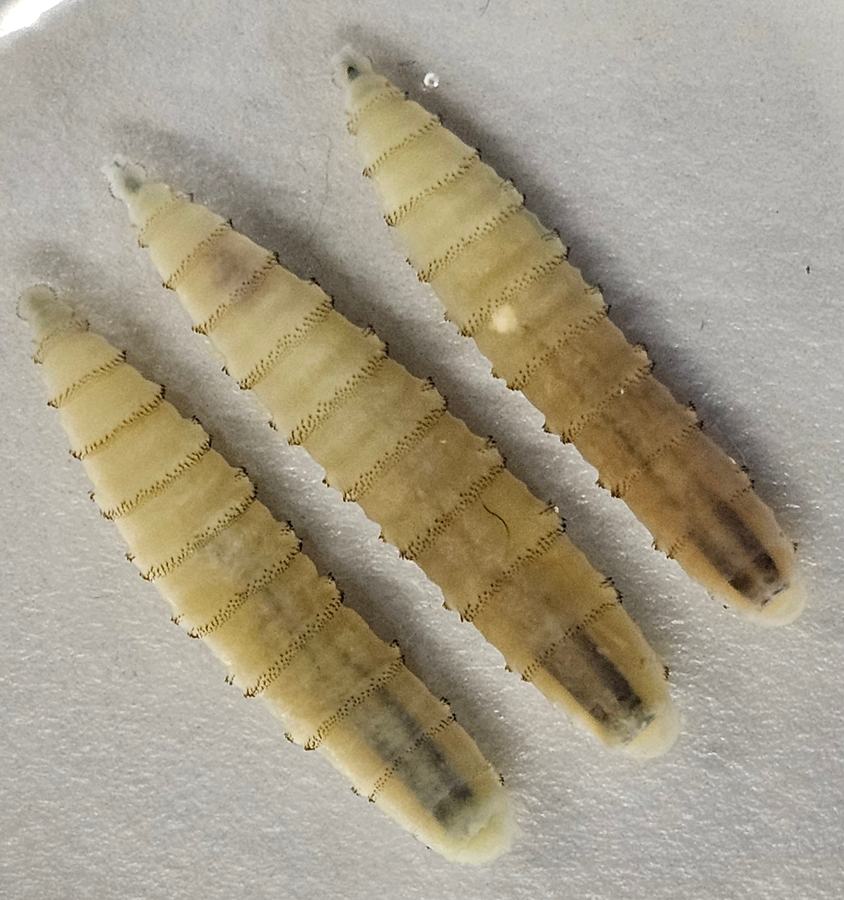
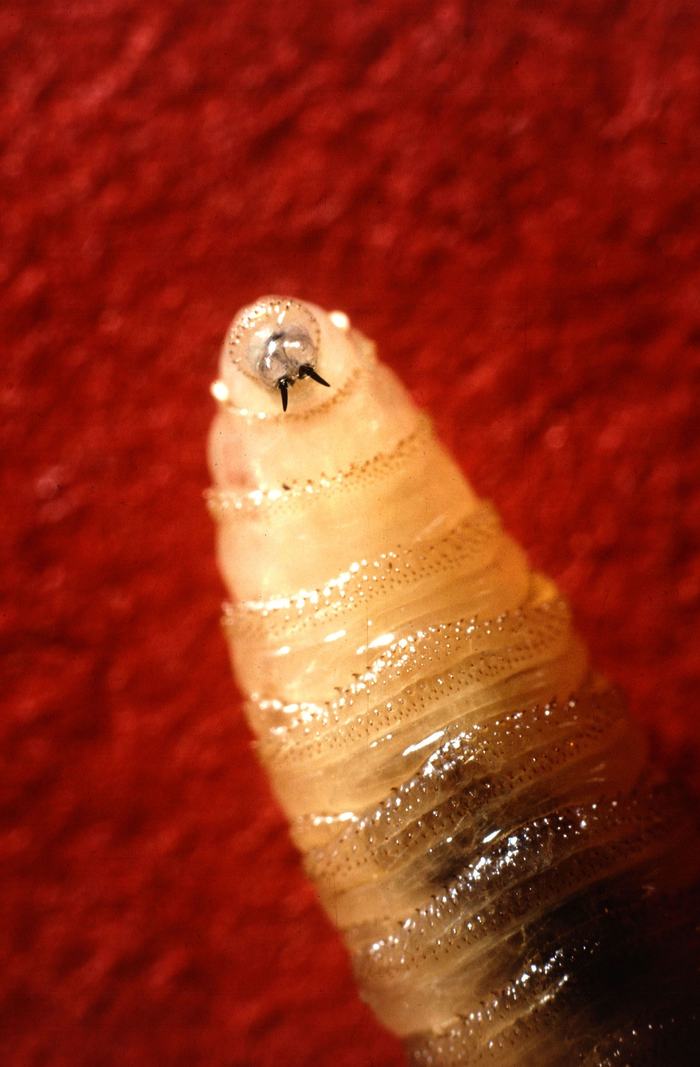
The New World Screwworm is a parasitic fly that causes serious damage and can lead to death of the animal. The NWS can infest livestock, pests, wildlife, and although rarer – people. The adult fly lays eggs on the edges of an open wound. The eggs hatch into larvae which burrow into the wound to feed on the tissue, causing the wound to become bigger and deeper. The larvae stage of this pest has sharp mouth parts that resemble hooks which is what causes the tissue damage. Once the larvae are finished feeding, they drop off the animal to pupate underground in the soil and emerge as an adult fly where the cycle continues. This pest was once in the United States but was successfully eradicated by releasing sterile males, known as the sterile insect technique (SIT). As of May of this year, we are beginning to turn our attention back to this pest as case numbers increase in South America and Mexico, with one case in Mexico being only 70 miles from the U.S. border as of September 2025. Because of these recent cases moving north of a biological barrier that has contained this pest for decades until now, measures are being taken in an attempt to prevent this pest from entering the U.S. by USDA APHIS and other federal agencies. These include use of the SIT, developing and enforcing animal movement controls, and increasing surveillance, outreach, and education. To see the announcement, use the link here: https://www.usda.gov/about-usda/news/press-releases/2025/08/15/usda-announces-sweeping-plans-protect-united-states-new-world-screwworm. There have been no detections of NWS in livestock or other animals in the United States at this time, but being aware of this pest and monitoring for signs will likely become increasingly important. Look for signs such as irritated behavior, head shaking, the smell of decay, and presence of larvae (maggots) in wounds. If you see any of these signs, contact your veterinarian and call NCDA&CS Veterinary Division at (919) 707-3250.
New World Screwworm (NWS)
(Updated: Nov. 7, 2025, 8:14 a.m.)
Written By