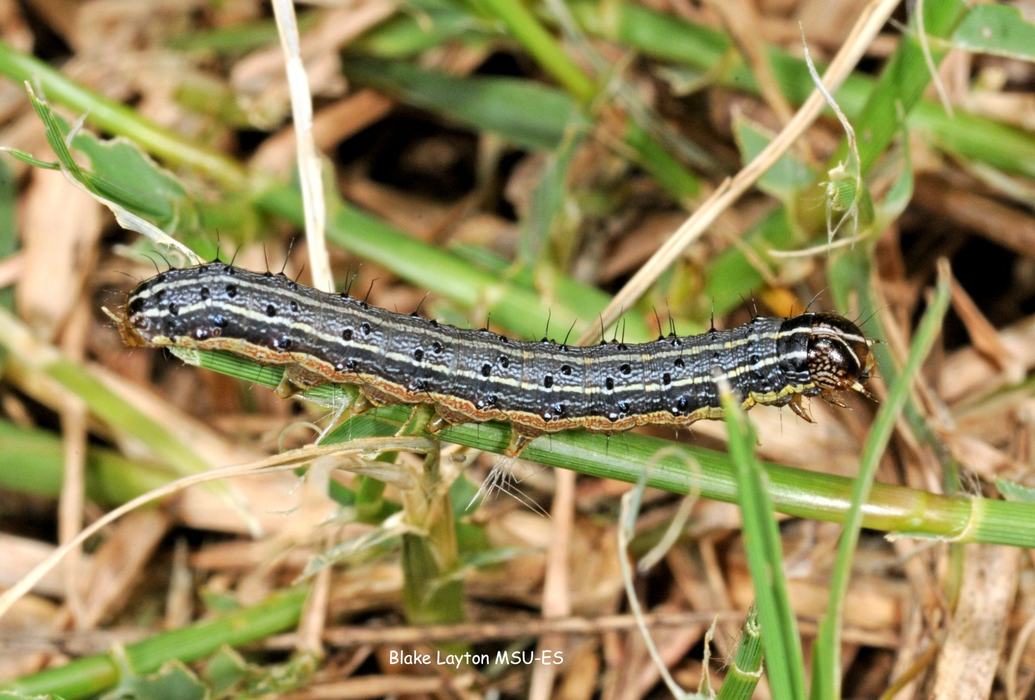
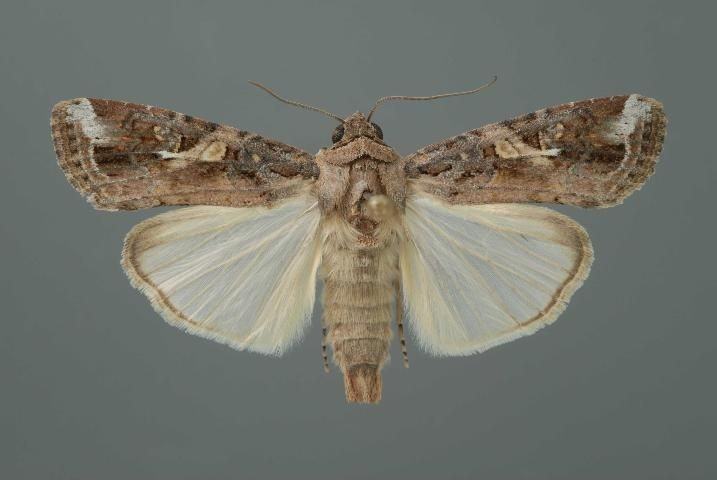
These pests are found in pastures and hayfields during the late summer or fall, as their name suggests. Fall armyworm larvae are green, brown, or black and have white/yellowish lines from head to tail. They may be identified easiest by the distinct inverted ‘Y’ pattern on their faces. They start off very small, less than ⅛ of an inch resulting in damage to the plants going unnoticed. However, they grow quickly which causes damage to occur rapidly. The larvae feed for 2-3 weeks until they are full grown to about 1 - 1 ½ inches long. The larvae feed on the leaf blades of grasses, leaving behind tough stems. When they are young, their feeding gives the grass a ‘windowpane’ effect. They often travel in waves, defoliating the grass and leaving behind brown spots. To scout for armyworms, look closely at the ground moving the grass to uncover any armyworms. Treatment for fall armyworms in pastures can include spraying. Products that are approved for pastures can be found in this publication from NC State. Always be sure to read and follow all label warnings and directions, including grazing restrictions.
Scout early and scout often! Unfortunately it can take only a few days for the field to become defoliated. Once that happens, the damage is done and spraying is likely not beneficial at this point. Pastures may need to be reseeded or fertilized later in the fall to encourage new growth. Scouting frequently and taking quick action can help save your pastures and hay fields.